
Few events shake the business world like a hostile takeover. No handshakes, no joint press releases, no polite negotiations — just one company moving to seize another against its will, often over the furious objections of the target’s board.
These battles have reshaped entire industries, created fortunes, destroyed others, and permanently changed how corporations defend themselves. Understanding how they work — and why the most famous ones unfolded the way they did — is essential reading for anyone in M&A, corporate finance, or executive leadership.
What Is A Hostile Takeover?
A hostile takeover is an acquisition attempt in which the acquiring company bypasses the target’s board of directors and goes directly to its shareholders — or uses other pressure tactics — to gain control. Unlike a negotiated deal, the target company’s management actively opposes it.
The word “hostile” is precise: the acquiring party is not welcome. Management may reject the offer as inadequate, strategically misguided, or simply unwanted. But rejection doesn’t end the process. It often accelerates it.
How Tender Offers Work
The most direct hostile takeover tool is the tender offer. The acquirer publicly offers to buy shares from the target’s shareholders at a premium — typically 20% to 50% above the current market price. The logic is straightforward: bypass the board by making the offer attractive enough that individual shareholders accept it.
If enough shareholders tender their shares, the acquirer gains a controlling stake regardless of what the board wants. That’s the mechanism. Speed matters enormously — most tender offers have a defined acceptance window, and the target’s defenses need to activate fast.
Proxy Fights Explained
A proxy fight is a different kind of assault. Rather than buying shares outright, the acquirer campaigns to replace the target’s board members with candidates friendlier to the deal. Shareholders vote by proxy, and if the insurgent slate wins enough seats, the new board can approve the transaction.
Proxy fights are longer, messier, and more public than tender offers. They require winning over institutional investors, pension funds, and activist shareholders — each with their own priorities. But for acquirers lacking the capital for a full tender offer, they can be equally effective.
Why Boards Reject Acquisition Offers
Boards reject acquisition offers for several reasons, not all of them self-serving. A bid may genuinely undervalue the company. It may create antitrust problems, threaten jobs, or destabilize a culture that took decades to build. Sometimes management has legitimate strategic reasons to stay independent.
But boards also resist takeovers to protect their own positions. This tension — between shareholder interests and board entrenchment — sits at the heart of nearly every hostile deal.
How Hostile Takeovers Changed Corporate History
The 1980s transformed hostile takeovers from rare corporate anomalies into a recognized industry. Leveraged buyouts became mainstream, junk bond financing made it possible to fund enormous deals with minimal equity, and a generation of corporate raiders — T. Boone Pickens, Carl Icahn, Ron Perelman — made headlines by targeting companies once considered untouchable.
Before this era, a hostile bid was seen as disreputable. By the end of the decade, it was simply another deal structure. The legal, financial, and tactical playbooks that govern hostile M&A today were largely written in boardrooms and courtrooms during those ten years.
Shareholder Capitalism And Activist Investors
The broader shift toward shareholder primacy gave hostile bidders powerful ideological cover. If a company was underperforming relative to its potential, the argument went, management had failed its owners. Replacing them — forcibly if necessary — was not aggression. It was accountability.
Activist investors carried this logic into the 21st century. Funds like Elliott Management and Jana Partners built strategies around identifying companies with gaps between current value and potential value, then using public pressure, proxy campaigns, and strategic M&A to close that gap. Many hostile bids today trace their origins to activist accumulation of a stake.
Why Hostile Deals Became More Common
Three structural factors made hostile takeovers more common over time: better access to capital markets, the fragmentation of institutional share ownership (making it easier to win proxy battles), and the professionalization of M&A advisory services on both the attack and defense sides.
Corporate governance standards also evolved. Regulators, courts, and institutional investors grew less tolerant of boards using defensive tactics purely to entrench themselves, which tilted the playing field modestly toward acquirers.
The Biggest Hostile Takeovers Of All Time
Throughout corporate history, a handful of deals have stood out not just for their staggering price tags, but for the sheer audacity with which they were pursued. These are the battles where acquirers bypassed reluctant boards, launched public tender offers directly to shareholders, and fought tooth and nail through regulatory hurdles and court injunctions.
From billion-dollar media empires to beloved consumer brands, the following cases represent the most dramatic — and consequential — hostile takeovers ever executed.
AOL vs. Time Warner

The AOL–Time Warner merger of 2000 remains the largest — and most cautionary — deal in media history. Technically structured as a merger, AOL’s approach to Time Warner carried the hallmarks of an aggressive, asymmetric acquisition: an internet company valued at dot-com multiples buying a vastly larger traditional media conglomerate.
The deal closed at a combined valuation of $165 billion. By 2002, the merged entity had written down $99 billion in goodwill — one of the largest write-downs ever recorded. AOL’s subscriber base collapsed as broadband replaced dial-up. The synergies promised never materialized. Time Warner eventually spun off AOL in 2009 for roughly $3.4 billion. The deal destroyed more value than almost any transaction in corporate history.
Its lessons are still taught in business schools: premium pricing and strategic narrative cannot substitute for operational reality.
Vodafone vs. Mannesmann

In 1999, UK telecoms giant Vodafone launched a €180 billion hostile bid for Germany’s Mannesmann — the largest hostile takeover ever completed at the time. Mannesmann’s board rejected Vodafone’s initial approach. Vodafone went directly to shareholders.
The cultural dimension was significant. German corporate governance traditionally emphasized stakeholder interests over pure shareholder returns, and the hostile bid became a political flashpoint. Ultimately, Mannesmann shareholders accepted the deal after Vodafone improved its offer. The transaction created the world’s largest mobile operator by subscribers at the time, though Vodafone subsequently divested many Mannesmann assets.
Kraft vs. Cadbury
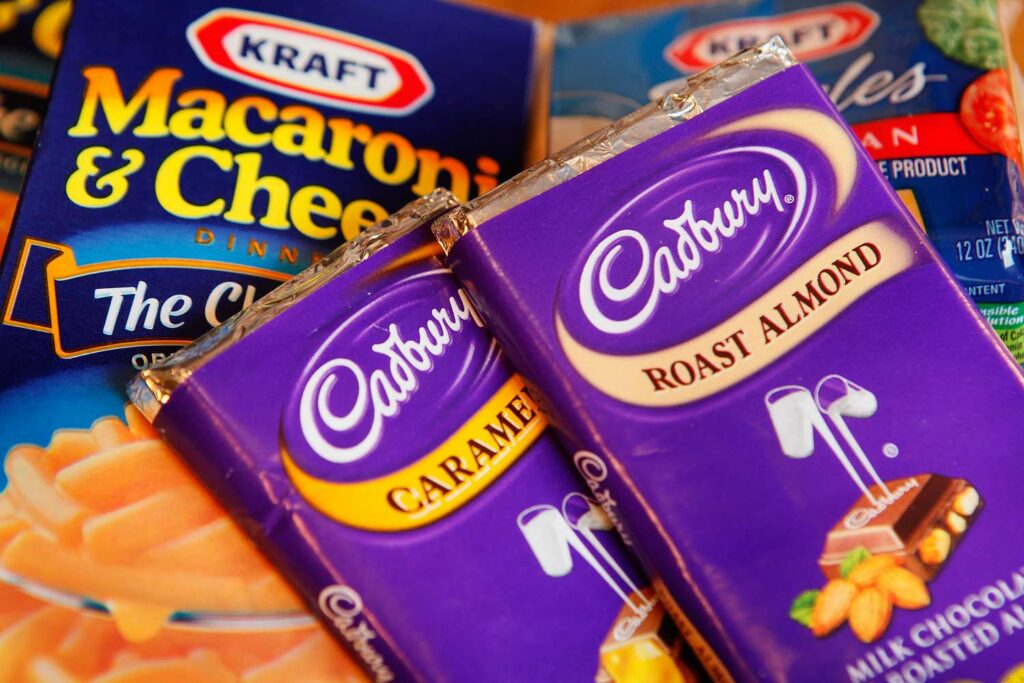
In 2010, Kraft Foods launched a £11.5 billion hostile bid for British confectionery icon Cadbury. Cadbury’s board, led by CEO Todd Stitzer, publicly dismissed the offer as “derisory” and launched a vigorous public defense, framing the deal as a threat to British heritage.
Kraft raised its offer three times over several months. It ultimately prevailed after winning over enough institutional shareholders. The aftermath was contentious: Kraft quickly closed a Cadbury factory it had promised to keep open, drawing criticism from UK regulators and politicians. The deal is now a reference point in debates about hostile takeover regulation and acquirer accountability post-close.
InBev vs. Anheuser-Busch

When Belgian-Brazilian brewing group InBev made an unsolicited $46.4 billion bid for Anheuser-Busch in 2008, the American brewer — maker of Budweiser — initially rejected it outright. The Busch family, which had controlled the company for generations, was vocally opposed.
InBev threatened a proxy fight to replace the board if negotiations failed. Faced with this pressure, Anheuser-Busch’s board entered negotiations. InBev raised its offer to $52 billion — roughly 35% above the pre-bid share price — and the deal closed later that year, creating Anheuser-Busch InBev, the world’s largest beer company by volume.
Sanofi-Aventis vs. Genzyme
French pharmaceutical company Sanofi-Aventis made a $18.5 billion hostile bid for rare disease specialist Genzyme in 2010. Genzyme’s board rejected the initial offer as undervaluing the company’s pipeline. Sanofi responded with a public tender offer and a sustained shareholder campaign.
The deal eventually closed at $20.1 billion in early 2011 after Sanofi added a contingent value right — a payment structure tied to future sales of Genzyme’s drug Lemtrada — to close the valuation gap. It is a useful example of creative deal structuring resolving a pricing impasse: rather than a simple price increase, both sides found a mechanism to share future upside.
Elon Musk vs. Twitter

In April 2022, Elon Musk disclosed a 9.1% stake in Twitter and made an unsolicited offer to buy the company for $54.20 per share — $44 billion in total. The Twitter board initially adopted a poison pill defense. Musk publicly threatened to take his offer directly to shareholders.
Within two weeks, Twitter’s board reversed course and agreed to the deal. What followed was months of legal chaos: Musk attempted to withdraw, citing concerns about bot accounts; Twitter sued to enforce the agreement; and in October 2022, Musk completed the acquisition to avoid a trial. He subsequently took the company private, rebranded it as X, and replaced the entire board.
The episode is a recent hostile takeover example unlike most others — driven as much by public social media maneuvering as by traditional financial mechanics.
Paramount vs. Warner Bros. Discovery

The wave of consolidation in media streaming has produced ongoing M&A tension between major studios. Warner Bros. Discovery and Paramount Global engaged in merger discussions in 2024, with Paramount’s controlling shareholder Shari Redstone navigating competing bids while fending off activist pressure. Though talks evolved through various structures, the underlying dynamic — a controlling shareholder under financial pressure, activist investors pushing for a sale, and multiple bidders circling — reflects the new terrain of corporate hostile takeovers in content and distribution.
Common Strategies Used In Hostile Takeovers
Acquirers have developed a handful of proven approaches to seize control of a target company without board approval — each designed to exploit a different pressure point, whether financial, legal, or political.
Tender Offers
As described above, a tender offer is the acquirer’s direct appeal to shareholders. It sets a price, a deadline, and a minimum acceptance threshold. It works best when the acquirer can credibly finance the deal and the target’s institutional shareholders are dissatisfied with current management.
Bear Hugs
A bear hug is an offer delivered directly to the target’s board, framed as generous and time-pressured, with the implicit (or explicit) threat that it will be taken public if rejected. The term captures the dynamic precisely: the offer is presented as friendly, but refusal is costly. Many hostile deals begin as bear hugs before escalating.
Creeping Acquisitions
In a creeping acquisition, the bidder gradually accumulates shares on the open market below the threshold that triggers formal disclosure or mandatory bid requirements. By the time the target’s board is fully aware, the acquirer already holds a meaningful stake — complicating defensive options and signaling serious intent to other shareholders.
Proxy Battles
When a direct purchase is not feasible — due to price disagreements, regulatory concerns, or target defenses — the acquirer campaigns to replace board members through a shareholder vote. A successful proxy battle gives the acquirer the governance control needed to approve the deal on its own terms.
Why Some Hostile Takeovers Succeed — And Others Fail
The outcome of a hostile takeover rarely hinges on a single factor — it typically reflects a combination of shareholder sentiment, deal economics, regulatory landscape, and the acquirer’s ability to execute under pressure.
Shareholder Support
No hostile bid succeeds without shareholder support. Institutional investors — pension funds, mutual funds, hedge funds — control the majority of shares in most large public companies. They will accept a hostile offer if the premium is compelling and they have lost confidence in current management. They will reject it if they believe the offer undervalues the company or that management’s standalone plan is credible.
The acquirer’s ability to tell a convincing value story to these investors is often more decisive than any legal or financial maneuver.
Financing Strength
Hostile deals are expensive and uncertain. Financing must be committed before the bid is public — lenders are not enthusiastic about funding deals that may collapse mid-process. Acquirers with strong balance sheets or committed debt financing are taken more seriously, which is itself a negotiating advantage.
Deals that fall apart, as Musk initially attempted with Twitter, typically involve questions about financing certainty or acquirer commitment.
Regulatory Approval
Antitrust regulators in the US, EU, and UK have become increasingly active in reviewing large transactions. A hostile bid that raises serious antitrust concerns gives the target’s board a legitimate public argument for resistance — and may make institutional investors hesitant even if the price is attractive.
Regulatory risk is not just a delay. In some sectors, particularly technology and pharmaceuticals, it can be a deal-killer.
Post-Merger Integration Problems
Even successful hostile deals face integration challenges that friendly deals avoid. When management teams are replaced or resign, institutional knowledge walks out the door. Cultures that were forced together rarely blend smoothly. The AOL–Time Warner write-down was in part a product of two organizations that never genuinely integrated.
This is why some M&A case studies conclude that hostile deals, on average, destroy more shareholder value than they create — even when they technically succeed.
FAQ
What Is A Hostile Takeover?
A hostile takeover is an acquisition attempt in which the acquirer bypasses the target’s board of directors and approaches shareholders directly — typically through a tender offer or a proxy fight — to gain control of the company without management’s consent.
Are Hostile Takeovers Legal?
Yes. Hostile takeovers are legal in most major jurisdictions, provided they comply with securities regulations, disclosure requirements, and antitrust laws. Tactics like tender offers and proxy fights are well-established legal mechanisms. Defense tactics like poison pills are also legal, though some have faced court challenges.
What Is The Largest Hostile Takeover Ever?
The Vodafone–Mannesmann deal in 1999–2000, valued at approximately €180 billion, is generally cited as the largest completed hostile takeover in history by deal value.
Why Do Companies Resist Hostile Acquisitions?
Boards resist hostile bids for several reasons: the offer price may undervalue the company, the acquirer’s strategic rationale may be flawed, the deal may threaten jobs or corporate culture, or management may simply be protecting its own positions. Not all resistance is self-serving — boards have a fiduciary duty to evaluate whether any offer truly serves shareholder interests.
Conclusion
Hostile takeovers are not simply aggressive corporate maneuvers. They are a mechanism of accountability — a way the market forces change when management fails to deliver value. The deals covered here range from transformative to catastrophic, but they share one quality: each one permanently changed the companies involved and the industries around them.
For modern executives, M&A teams, and corporate development professionals, the practical lessons are clear. A company that does not actively manage its shareholder relationships, governance vulnerabilities, and strategic narrative is exposed. Defenses matter — but the best defense is a stock price that makes an unsolicited bid prohibitively expensive and a board that shareholders actually trust.
And when a deal does become contested, the tools that protect your information — the data rooms, the access controls, the audit trails — are not administrative overhead. They are strategic assets. In a hostile deal, the difference between a well-documented position and a chaotic one can determine whether your company survives the attack on its own terms.