Mergers, acquisitions, and fundraising transactions share one critical requirement: secure file sharing. A virtual data room provides that foundation. This solution delivers a controlled environment for managing documents and collaborating. When chosen well, the platform accelerates the entire transaction.
Two solutions often appearing on the shortlist are SecureDocs and DealRoom. Both are established virtual data room services. At the same time, they support different transaction dynamics.
In this SecureDocs vs DealRoom comparison, you will explore:
- Core platform capabilities of SecureDocs and DealRoom
- Key differences in usability, collaboration tools, and workflow management
- How each platform supports different deal sizes and transaction complexity
- Typical use cases and industries where each solution is commonly adopted
- User feedback highlighting strengths and potential limitations
- Practical considerations when selecting a VDR for your deal process
Quick comparison — SecureDocs vs DealRoom
Before examining each platform in detail, look at the high-level differences between SecureDocs and DealRoom.
| Feature | SecureDocs | DealRoom |
|---|---|---|
| Best for | Small to mid deals | Mid to complex deals |
| Pricing model | Flat monthly | Tiered / project-based |
| Ease of setup | Fast | Moderate |
| Workflow tools | Basic | Advanced |
| Reporting and metrics | Standard | Real-time dashboards |
SecureDocs works for lean teams running straightforward deals, where fast setup and predictable pricing are priorities. DealRoom is better suited to complex transactions involving multiple workflows and deeper due diligence analytics.
What Is SecureDocs?
Headquarters: California, United States
Founded: 2012
UpGuard security rating: 768/950
G2 user rating: 4.6/5 (50 reviews)
SecureDocs is a virtual data room that helps organizations store, manage, and securely share sensitive documents. The platform now operates as a standalone part of Onit, a global provider of workflow and AI solutions.
SecureDocs VDR is used across the following industries:
- Technology
- Life sciences
- Investment banking
- Legal firms
- Private equity and venture capital
The provider focuses on simplicity, security, and speed of deployment. Within minutes of creating an account, the data room is fully operational. It allows teams to upload documents, assign permissions, and begin collaborating with internal and external parties instantly.
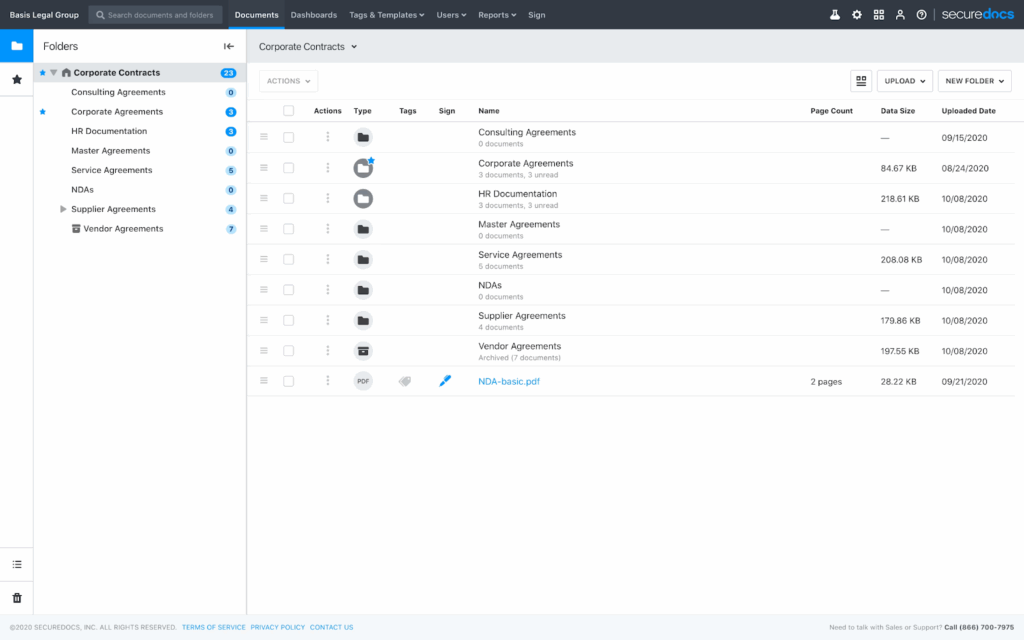
SecureDocs user interface
SecureDocs core features
The provider ensures secure, efficient, and transparent deal management through the following tools:
- Permission-based user roles. Teams can assign granular permissions at the folder or subfolder level, with view-only access for sensitive documentation.
- Dynamic watermarking. Every document in the deal room carries a watermark with the user’s name, email, and timestamp, discouraging unauthorized sharing.
- Customizable NDA. Users must sign a non-disclosure agreement before accessing the data room.
- Data room archiver. Users can download a complete copy of the data room when the deal concludes without the provider’s help.
- Customizable dashboards. Dashboards provide real-time statistics, showing how investors engage with documents.
- Drag-and-drop or scan uploads. Documents move into the deal room directly from a computer or a Fujitsu ScanSnap scanner.
- Audit log. The software records every action with its date and time, and users can export and share the log.
- Q&A. Questions and answers appear in the data room or by email, with common queries highlighted to avoid repetition.
You can learn more about SecureDocs data room capabilities here.
When these features work best
SecureDocs tool set aligns with the following use cases:
- Early-stage prep. Startups and small companies often need to assemble a data room quickly for initial fundraising or internal review. SecureDocs’ fast setup and intuitive interface let teams get a secure workspace running in minutes without extensive training and IT support.
- Small deals. Smaller transactions typically involve fewer documents and stakeholders. SecureDocs’ straightforward permission controls, drag-and-drop uploads, and basic dashboards provide the level of organization needed without unnecessary complexity.
- External investor access. When sharing confidential information with investors, the software’s dynamic watermarking, customizable NDAs, and audit logs ensure sensitive data stays protected and easy to navigate for outsiders.
SecureDocs is a suitable solution when teams need a reliable, low-friction virtual data room that keeps documents secure and provides activity insights, without overloading users with advanced features.
SecureDocs pricing overview
SecureDocs charges a flat rate. This approach gives teams transparent pricing for secure document management and eliminates concerns about per-user or per-page fees.
| Plan | Price | Billing | Best for |
|---|---|---|---|
| 3-Month Plan | $400/month | Quarterly | Short-term projects such as divestments, M&A, or bankruptcy deals |
| 12-Month Plan | $250/month | Annually | Long-term projects or building a corporate repository |
| Volume Packages | Custom | Annually | Organizations managing multiple projects simultaneously |
Overall, SecureDocs’ pricing structure offers clear value and predictability for deal teams. As one user noted:
“Some of my favourite parts of the software are that it is very reasonably priced and cost-effective. It has a flat-rate structure, so we can have unlimited users for one price.”
Affordable pricing and unlimited access make SecureDocs especially suitable for small to mid-size deals where budget and simplicity matter.
Check how to set up a data room for investors here.
What is DealRoom?
Headquarters: London, United Kingdom
Founded: 2012
UpGuard security rating: n/a
G2 user rating: 4.3/5 (66 reviews)
DealRoom is project management software for managing the full M&A lifecycle in one centralized workspace. The platform combines a virtual data room with deal management tools that support document organization, communication, and collaboration.
DealRoom is used across the following industries:
- Technology
- Manufacturing
- Consulting and professional services
- Energy and environment
- Materials and agriculture
- Healthcare, education, and social services
- Insurance
The provider focuses on workflow coordination, collaboration, and structured deal execution. By combining document management features with task tracking and communication tools, DealRoom helps teams organize the due diligence process and keep complex transactions on track.
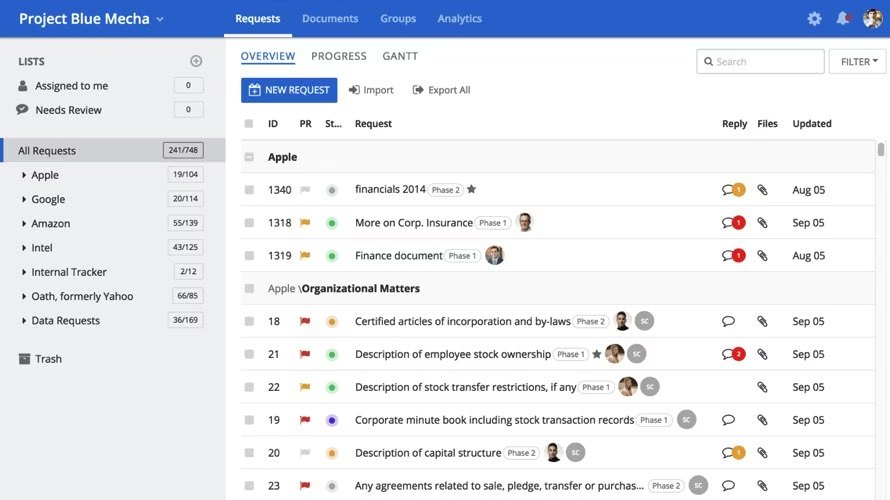
DealRoom user interface
DealRoom core features
The solution supports structured deal execution and collaboration across the M&A lifecycle through the following tools:
- Centralized deal data repository. All information in the virtual dealroom remains organized in a single system, simplifying pipeline management and improving visibility across transactions.
- Granular permissions. Role-based permissions let teams restrict access to sensitive deal documents and requests, ensuring the right people see only what they need.
- Deal tracking. Teams can view and track all deal targets across different stages of the M&A pipeline in the centralized workspace.
- Automated real-time reporting. The platform generates and distributes reports automatically, giving teams quick insights into performance.
- Built-in project management tools. Teams can assign tasks, track diligence requests, add notes, and coordinate workstreams during the transaction process.
- Stakeholder communication hub. Integrated communication tools support transparent collaboration among buyers, sellers, advisors, and internal teams.
- Pipeline analytics. Advanced analytics tools provide insights into workflows, diligence activity, and deal progress.
- Team performance insights. The platform tracks team activity and collaboration metrics to highlight efficiency and identify workflow bottlenecks.
You can learn more about DealRoom data room capabilities here.
When these features work best
DealRoom functionality is particularly effective for the following use cases:
- Mid- to large-scale deals. Complex transactions with many stakeholders and large document volumes benefit from DealRoom’s centralized deal data repository and collaboration tools, keeping all documents organized and teams aligned in one secure location.
- Multi-party diligence. The software streamlines request coordination, communication tracking, and stakeholder collaboration through its built-in project management and communication tools.
- Workflow-intensive transactions. Deals that require structured tracking of tasks, approvals, and document access use DealRoom’s task management, granular permissions, dashboards, and automated reporting to stay efficient and transparent.
The software excels when teams need a comprehensive solution to manage the M&A deal lifecycle, ensuring transparency, accountability, and efficiency.
DealRoom pricing overview
DealRoom offers plans tailored to different stages of mergers and acquisitions, allowing teams to choose a solution that fits their workflow needs:
| Plan | Price | Billing | Best for |
|---|---|---|---|
| Diligence & Integration | $1,000/month | Annually | Single or multiple buy- or sell-side projects |
| Pipeline | $1,000/month | Annually | Management and tracking of deal targets, communications, and pipeline activity |
| M&A Platform | Custom | n/a | The full M&A lifecycle |
Since 2022, the provider has had only one user review on G2, so we cannot comment on how users evaluate DealRoom’s pricing.
SecureDocs vs DealRoom — Which platform works better for investors?
During due diligence, professionals need tools to review large volumes of documents quickly, ask questions, and track updates without friction. Both providers support these requirements, but in different ways.
SecureDocs virtual data room works well when investors need fast, straightforward access to documents. Its user-friendly interface and permission-based controls allow users to open the dataroom, locate files quickly, and review materials without navigating complex workflows.
Security features such as watermarking help protect sensitive information while keeping the process simple. In smaller fundraising rounds or mid-market transactions, that simplicity often speeds up investor review.
Secure Docs pros
- Simple interface. Investors can quickly navigate folders and review documents without learning complex workflows.
- Fast access. Data rooms can be launched quickly, which helps investors begin diligence sooner.
Secure Docs cons
- Limited VDR tools. Investors coordinating multiple requests may find fewer key features for document management and workflow tracking.
- Basic analytics. Activity insights exist, but are not as detailed as those offered by more workflow-focused platforms.
DealRoom introduces a more structured approach to diligence tasks. Beyond data storage, the platform integrates project management, centralized communication, and activity analytics.
Investors can track document engagement, coordinate questions, and monitor updates within the same environment. When multiple stakeholders are involved, and diligence requires ongoing coordination, these tools help keep everyone aligned.
DealRoom pros
- Structured diligence process. Built-in request management and project tools help investors track outstanding information requests.
- Activity analytics. Engagement data helps deal teams and investors monitor document activity.
DealRoom cons
- Learning curve. Investors who only need quick document access may find the workflow tools unnecessary.
- More complex interface. The broader feature set can require more time to navigate compared with simpler data rooms.
Note: The DealRoom platform received only one user review since 2022. The user reports its intuitive interface and centralized workspace for managing deals. Possibly, most feedback is shared privately.
Practical tips for choosing the best data room for investors
The following tips can help teams choose an intuitive platform that supports efficient document review and security:
- Ease of use. A clear interface and simple navigation help investors find documents quickly and avoid unnecessary delays.
- Access control. Granular access controls ensure that investors can only view the files relevant to them, protecting sensitive information.
- Document organization. Logical folder structures make it easier to understand and navigate the deal materials.
- Activity visibility. Engagement analytics show which documents attract the most attention, helping deal teams identify investor interest.
- User feedback. Real user reviews from your industry can reveal how easy and secure the platform is.
Simply put, investors benefit from platforms that combine simple navigation, enhanced security, and clear document organization.
Final verdict — Which one should you pick?
For small to mid-size deals, SecureDocs lets you move fast, stay simple, and keep costs predictable. For mid- to large-scale transactions, DealRoom empowers teams to tackle complexity and drive deals forward with confidence.
Check the best virtual data rooms for investors and learn how to choose the right platform for your deal here.
FAQ
Is SecureDocs better for small rounds?
Yes. SecureDocs delivers a simple interface, flat-rate pricing, and fast setup. This all makes the solution well-suited for small to mid-size fundraising transactions.
How do the platforms support due diligence?
The solutions streamline the process in different ways. SecureDocs provides a straightforward, secure environment for smaller-scale due diligence. DealRoom offers more advanced tools, which help manage complex, multi-party processes.
Does DealRoom justify higher pricing?
The VDR proves its worth for transactions requiring structured workflows and multi-party collaboration. Its advanced user management, secure document sharing, and analytics deliver real value for teams tackling complexity.
Which is easier to use for investors?
SecureDocs is more intuitive for teams that need straightforward access to documents without complex workflows. DealRoom offers more collaboration and tracking features, which benefit investors in complex deals. However, it may require a learning curve for first-time users.