
| Quick answer: A product-extension merger (also called a congeneric merger) combines two companies with related but non-competing products. Each side can sell into the other’s customer base and offer a broader product line. PepsiCo’s 2001 merger with Quaker Oats is a widely cited example. It added Gatorade, which PepsiCo called the leading isotonic brand, to PepsiCo’s beverage lineup. |
Global M&A deal value rose 40% to $4.9 trillion in 2025, the second-highest on record, according to Bain & Company’s Global M&A Report 2026. Those deals come in many shapes. One is the product-extension merger, where two companies with related products join forces without eliminating a direct competitor.
Most merger acquisition deals fall into a few types, and the product-extension label is easy to confuse with horizontal, vertical, and conglomerate deals. This guide defines the term, compares it with other merger types, walks through real examples, and lists the pros and cons. It also covers antitrust review and shows how a virtual data room supports the deal.
What Is a Product-Extension Merger?
A product-extension merger is a deal between two companies that sell different but related products to the same market. The goal is to broaden the combined product line and reach each other’s customers. The Corporate Finance Institute describes it as a combination of companies that serve the same markets with related products or services, allowing the merged company to group its offerings and reach more consumers.
Product-extension mergers usually happen between two companies in the same industry, or in neighboring ones, that already chase the same buyers.
Here’s the idea in plain terms. Your company sells one product. The other company sells something your customers often buy alongside it. After the merger, one company sells both, and neither side had to take market share from the other.
Product-Extension Merger Example
Imagine a coffee brand and a creamer brand. Both sell through grocery stores to people who drink coffee at home. They don’t compete for the same shelf space, but shoppers often buy both in one trip.
After the merger, the combined company can run one sales team, negotiate one set of retail contracts, and bundle the two products in promotions. The merging companies also share costs, such as marketing and shipping, that they previously paid separately.
Also Known as a Congeneric Merger
A congeneric merger is the same thing as a product-extension merger. Corporate Finance Institute lists the two names together as one type on its merger overview page and describes the result as a new product added to one company’s existing product line. If a textbook, filing, or news story uses the term congeneric merger, you can read it as a product-extension merger.
Types of Mergers: Where Product-Extension Fits
Five common types of mergers are horizontal, vertical, conglomerate, market-extension, and product-extension. Each type answers one question: how do the two companies relate to each other?
- Note: A quick note on the difference between merger and acquisition deals. In a merger, two companies combine and operate as one legal entity. In an acquisition, one company buys another, and the buyer usually keeps its own identity. People often use both words for the same transaction, so you will see the labels below applied to either.
Types of mergers also differ from deal mechanics. A reverse merger, for example, describes how a private company goes public by combining with a listed one. It says nothing about what the two companies sell.
Product-Extension vs. Horizontal Merger
The horizontal merger’s definition is simple: two direct competitors selling the same product in the same market combine. A product-extension deal works differently because the two companies don’t sell the same item.
| Product-extension | Horizontal | |
| Companies involved | Related, non-competing products | Direct competitors, same product |
| Primary goal | Broaden product line, cross-sell to a shared customer base | Gain market share, reduce competition |
| Antitrust scrutiny | Generally lower | Generally higher |
In short, a horizontal deal removes a rival. A product-extension deal adds a product.
Product-Extension vs. Vertical Merger
The vertical mergers’ definition focuses on position, not product. The two companies sit at different stages of the same supply chain, such as a manufacturer and its parts supplier. A product-extension deal joins companies at the same level that sell related products to the same buyers.
| Product-extension | Vertical | |
| Companies involved | Same customer base, different but related products | Different stages of the same supply chain |
| Primary goal | Portfolio breadth, cross-selling | Supply chain control, cost efficiency |
| Antitrust scrutiny | Generally lower | Generally lower, but real |
Product-Extension vs. Conglomerate Merger
A conglomerate merger combines companies in unrelated industries, with no product or customer overlap. A product-extension deal stays inside a related product category and a shared customer base. An airline buying a software company is a conglomerate deal. A coffee brand joining a creamer brand is not.
| Product-extension | Conglomerate | |
| Companies involved | Related products, shared customer base | Unrelated industries |
| Primary goal | Portfolio breadth, cross-selling | Diversification |
| Customer overlap | High | Little or none |
Product-Extension vs. Market-Extension Merger
People often mix up these two terms. A market extension merger combines companies that sell the same product in different markets, such as different regions. The goal is to reach new markets and a larger customer base, helping the merged company expand market share without changing its product.
A product-extension deal works the other way around. The market stays the same, and the products differ.
| Product-extension | Market-extension | |
| Companies involved | Different but related products, same market | Same product, different markets |
| Primary goal | Broaden the product line | Reach new markets and customers |
| Customer base | Shared | Separate, until the deal |
Real-World Product-Extension Merger Examples
Both product-extension merger examples below follow the same pattern: a company adds a related product line that its customers already buy. Both also show that real deals are messier than the textbook definition.
PepsiCo–Quaker Oats (2001)
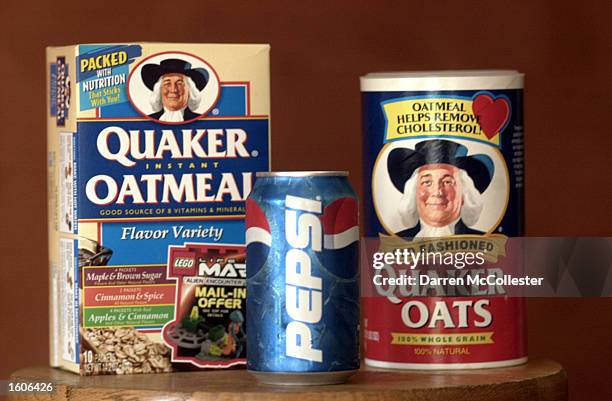
PepsiCo sold soft drinks, snacks, and juices. Quaker Oats owned Gatorade. When PepsiCo closed the deal, it said the company merger would add the leading isotonic brand to its beverages and create a company with about $25 billion in pro forma annual revenue, according to PepsiCo’s SEC filing.
The European Commission cleared the deal on March 27, 2001, under case COMP/M.2275. In the U.S., FTC commissioners split 2-2 on whether to challenge it. The FTC then voted 4-0 to close its investigation on August 1, 2001. PepsiCo also sold its All Sport drink to Monarch Company, the only place the two businesses overlapped, as shown in PepsiCo’s filing that day.
Procter & Gamble–Gillette (2005)

P&G announced on January 28, 2005, that it would acquire Gillette in a deal valued at about $57 billion, the largest in P&G’s history, according to P&G’s SEC press release. Gillette brought razors, Duracell batteries, Oral-B toothbrushes, and Braun shavers to a company known for household and personal care brands. P&G’s deal fact sheet put the two companies’ combined revenue at about $70 billion for fiscal 2006.
The FTC approved the deal after the companies agreed to divest three businesses: Gillette’s Rembrandt teeth-whitening line, P&G’s Crest SpinBrush toothbrushes, and Gillette’s Right Guard deodorant, per the FTC case page.
- Note: Some finance course materials use this deal as a product-extension merger example. Its scale and category mix lead other sources to describe it as conglomerate-style diversification. Treat the label as a simplification, not a single official classification.
What These Examples Show
In both cases, the buyer gained a related product line it didn’t sell before. Neither deal removed a direct competitor from the buyer’s core market.
Yet each deal still had a small overlap that drew the regulators’ attention. So a product-extension merger is rarely “pure.” You should map where the two product lines touch before you sign a merger agreement.
A simple check helps. List every product each company sells, then mark any pair that a customer could choose between. Those pairs are where regulators, and later your integration team, will focus. If the list is short, the deal fits the product-extension pattern well. If it is long, the deal may be closer to a horizontal merger, and you should plan for a tougher review.
Benefits and Risks of a Product-Extension Merger
A product-extension merger can quickly widen your reach, but it also brings integration work and regulatory questions. This table sums up the main product-extension merger pros and cons:
| Pros | Cons |
| Cross-selling to a shared customer base | Product or brand overlap can create conflicts |
| Wider range of product offerings | Integration costs and culture clashes |
| Cost synergies in sales, marketing, and distribution channels | Expected synergies can take longer or fall short |
| More revenue streams and less reliance on one product | Regulatory review if one product line gains outsized reach |
The benefits come from selling more to people who already trust one of the two brands. Shoppers who buy your product are warm leads for the other company’s product, so sales teams spend less to win each new order. A shared sales team and shared distribution channels can also lower costs. That gives the combined company a competitive advantage over rivals that sell only one product.
The risks show up after closing. Teams must merge systems, brands, and pricing. Customers may also react badly if a favorite product changes or disappears. If the two product lines overlap more than expected, you may have to sell one off, as P&G and PepsiCo did.
Product-Extension Mergers and Antitrust Regulation
A product-extension merger doesn’t eliminate a direct competitor, but regulators still review it. The FTC and DOJ released the 2023 Merger Guidelines on December 18, 2023. Under Guideline 6, as Thompson Coburn summarizes, the agencies ask whether a merged firm could extend a dominant position into a related market through tying, bundling, or higher entry barriers.
In February 2025, FTC Chairman Andrew Ferguson confirmed in a staff memo that these guidelines remain in effect. The PepsiCo and P&G reviews above happened under older rules, but they show the same pattern: regulators focus on the point where the two product lines meet.
How Virtual Data Rooms Support Product-Extension Mergers
A virtual data room (VDR) is a secure online space for storing and sharing confidential documents during due diligence.
Once two companies with related product lines agree to talk, a VDR keeps the work organized. For this deal type, a VDR helps in four specific ways:
- It stores and shares product-line financials, brand and intellectual property records, and distribution agreements from both companies in one protected place.
- It supports phased, standardized disclosure, so each side can reveal product and customer data step by step as trust builds.
- It tracks engagement, showing which teams review which product-line documents, so you can see where integration planning needs to start first.
- It organizes due diligence across two separate but related product operations, instead of scattering files across email threads between brand teams.
Read more: Explore the best virtual data rooms for M&A and choose the one for your deal.
Final Takeaways
A product-extension merger combines two companies with related but non-competing products to broaden the product line and reach a shared customer base. It differs from horizontal deals, which remove a rival, and from vertical deals, which join stages of a supply chain. Market-extension and conglomerate deals differ again on products and markets.
PepsiCo–Quaker Oats and P&G–Gillette show the upside and the regulatory limits. Check where the product lines overlap, plan for integration, and keep your documents organized.
FAQ
What is a product-extension merger?
A product-extension merger joins two companies that sell different but related products to the same market. The combined company can cross-sell to both customer bases and offer a wider product line. It does not remove a direct competitor.
What is an example of a product-extension merger?
PepsiCo’s 2001 merger with Quaker Oats is widely cited. It added Gatorade to PepsiCo’s drinks and snacks. Regulators still reviewed the deal because PepsiCo owned a competing sports drink.
What’s the difference between a product-extension merger and a market-extension merger?
A product-extension merger combines different, related products sold in the same market. A market-extension merger combines the same product sold in different markets, such as different regions. One widens the product line. The other widens the geographic reach.
Is a product-extension merger the same as a congeneric merger?
Yes. Corporate Finance Institute lists congeneric and product-extension mergers as one type. Both terms describe companies that sell related, non-competing products to the same customers.
Are product-extension mergers subject to antitrust review?
Yes. Regulators review them, usually with less concern than horizontal deals. Under the 2023 FTC and DOJ Merger Guidelines, the agencies check whether the combined company could extend a dominant position into a related market.