5 Ways Investment Banking Teams Use VDR to Accelerate Deal Execution
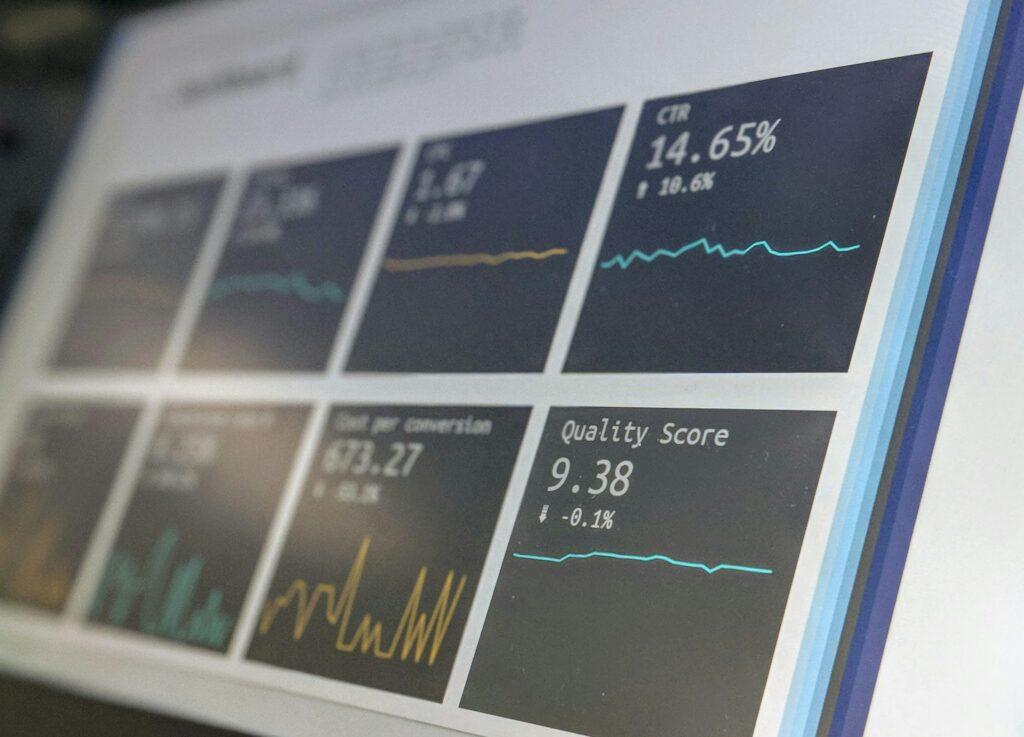
/Investment bankers face intense pressure. Every deal comprises thousands of files, such as financial statements, contracts, investor presentations, call notes, and regulatory documents, that are usually scattered over emails, shared drives, and legacy systems in the corporate finance and investment banking industry.
One of the largest challenges in modern mergers and acquisitions (M&A) is managing the large volume of unstructured data without slowing down performance. This is where Virtual Data Rooms (VDRs) come into play as a safe foundation for investment banking services. Investment banks typically rely on these platforms to centralize information, streamline workflows, and support complex corporate finance and capital markets activities.
The most popular platforms are further advanced today. With AI-based tools overlaying investor data room content, teams can search quickly, gain autonomy, have a real-time understanding, and implement smarter workflow management. What ensues is greater diligence, fewer mistakes, and faster deal processing at all stages of the investment banking industry and capital markets transactions.
The article focuses on the five most significant current methods for an investment banking division to accelerate deals, minimize friction, and enhance the deal-closure rates through data rooms.
1. CIM Draft Creation from VDR Content
One of the most resource-intensive and time-consuming tasks in a sell-side process is creating a Confidential Information Memorandum (CIM). Conventionally, this would take weeks of document gathering, hand preparation, drafting, and reviewing with corporate clients. Modern data room software for investors now reduces this stage to days rather than weeks, saving investment bankers valuable time while enhancing corporate finance quality.
Consolidating Diverse Sources from the Data Room
The bankers have to draw on dozens of sources for a sell-side engagement, including financial models in the VDR, management call notes, historical strategy decks, operational KPIs, customer analytics, market research, and legal summaries. These files often exist in different formats and across disconnected systems, including those used by asset management teams.
A queryable, up-to-date workspace lets teams access all files in a single data room investment banking environment. This eliminates manual copy-pasting between folders, wasted time on data searches, and minimizes version mess. Unlike manual reconstruction information, groups operate with a single point of truth.
Another outcome of this consolidation is reduced dependency. When an analyst leaves the deal team, it does not influence the deal process since the information has already been embedded in the data room for investors.
Structured, Source-Linked Outputs
Advanced platforms maintain context, structure, and source references when the text is extracted. This means investment bankers play a crucial role in creating clean, logically organized CIM blocks with direct connections back to the original documents that underpinned each statement.
This enables:
- Faster internal reviews
- Increased trust in data quality
- Simpler compliance and audit preparations
Its real-world effect is mechanical. CIMs, which previously took 2-4 weeks to compile, can now be created in hours or a few days, which is essential when preparing for an initial public offering (IPO).
Seamless Slide / Deck Generation
Once the narrative is designed, the same information can be used to create presentation-ready slides. Important tables, charts, and summaries are not recreated: they are turned into management and investor decks.
Rather than repeating the same financial waterfalls, market-sizing decks, or competitive positioning structures five times, the teams access organized CIM material to speed up internal consultation and buyer-facing materials — a critical factor for institutional clients and investors.
2. Streamlined Buyer Q&A Processes
The issue of buyer questions is inevitable during the active phases of the deal; however, uncontrolled Q&A can be a major bottleneck. Conventional workflows via email messages rapidly become knotted back and forth, with lost replies and duplication of effort. Modern investment data room platforms reorganized this whole process.
Integrated Q&A Workflows
Buyers’ questions are placed through VDR with direct relation to the specific documents or folders. Deal teams give owners deadlines, label subject-matter experts, and track progress.
Such an organized workflow guarantees:
- No question gets lost
- Internal responsibility is clear
- The responses are standardized and can be reviewed
Investment banking groups can use Q&A as a regulated flow rather than searching the inbox or relying on memory.
Audit Trails for Regulatory Compliance
All the questions, answers, edits, and attachments are automatically recorded. Such fully functioning activity trails are essential to controlled transactions, internal compliance, and post-deal reviews, particularly in:
- Financial services
- Health and life sciences
- Energy and infrastructure
- Cross-border transactions
If regulators, auditors, or legal departments require a review of how information is disclosed, the entire history of interactions will be available immediately. This level of transparency supports financial responsibility and adherence to investment banking activities.
Reduced Deal Friction
Teams remove friction on both sides of the table by eliminating fragmented email chains, buyer follow-ups, and manual follow-ups. Purchasers receive more expedited access to valid responses. Sellers do not experience miscommunication and tiredness.
The result is faster turnaround, greater buyer confidence, and a less painful diligence experience — critical for raising capital, capital raising, and equity research in highly competitive deals.
3. Pitch Deck Development & Public Information Book (PIB) Development
Pitch materials and Public Information Books (PIBs) should be data-intensive, accurate, and should be created within a strict timeframe. In the past, rebuilding large amounts of content was necessary for every single pitch. VDR-tied workspaces have become faster, more scalable, and consistent when creating decks across engagements.
Generating Market Maps and Strategic Narratives
Both VDR content and external data enable bankers to extract KPIs, sector trends, competitive intelligence, transaction benchmarks, and industry research directly. These inputs power:
- Market opportunity maps
- Competitive landscapes
- Growth strategy narratives
- Buyer segmentation frameworks
Bankers do not have to recreate the entire sector knowledge; rather, they operate on organized, verified information that conveys market reality and the target company’s position within private equity and hedge funds.
Reusing Previous Deal Content
A live, searchable knowledge base enables teams to reuse successful slides, charts, and stories in previous deals. This reduces duplication of work and creates synergy in the message delivered throughout pitch books, teasers, management presentations, and PIBs.
For example:
- There is no longer any need to rebuild valuation methodology slides.
- Sections of the market overview may be customized rather than replicated.
- The timelines of processes remain standardized within similar dealings.
This reuse enhances speed and consistency in professionalism throughout a firm’s portfolio companies and corporate clients.
Faster Deck Assembly
With structured, readable data, bankers can automatically create complete decks, or near-complete ones, within platforms such as Hebbia. Teams are not manually formatting each slide; they are focused on strategy, positioning, or messaging.
This shortens:
- Initial pitch turnaround
- Internal approval cycles
- Client feedback loops
In a competitive pitch, the faster the production speed, the higher the win rate is, especially for public companies, institutional investors, corporations executing large projects, and those planning stock market listings or secondary offerings.
4. Accelerated Deal Closing Through Advanced Analytics and Insights
In addition to storing and sharing, a modern virtual data room generates rich behavioral data that helps bankers direct deals more accurately and confidently. These analytics make the VDR a dynamic, not a passive store of deal intelligence.
Engagement Heatmaps
The engagement heatmaps show which documents buyers view most, how long they spend on the specific file, and where interest is concentrated. This visibility highlights each bidder’s real issues, including their focus on financial instruments, helping teams advise clients and prioritize capital raising efforts.
For example:
- The high activity on revenue quality schedules implies high-level financial checks.
- Recurrent reviews of customer focus information, which is frequently an indicator of risk evaluation.
- High action in legal folders denotes that deal terms have shifted into negotiation.
Such knowledge will enable bankers to know queries in advance.
Predictive Insights for Deal Probability
Buyer intentions can be identified through access patterns. Frequent review of financials, contracts, or risk areas may indicate stronger investment due diligence and a greater willingness to transact. These patterns also provide insight into potential risk management concerns that deal teams should address proactively.
These patterns help teams:
- Prioritize serious bidders
- Concentrate on areas with the greatest need
- Change auction plans during the process
Bankers no longer rely solely on buyer statements when making investment decisions; they support decisions with behavioral evidence, aligning with investment banking activities, advisory services, etc.
Faster Decision-Making
Real-time analytics help bankers rapidly adjust positioning, address issues more promptly, and cut negotiation time. When buyer activity declines, the teams act sooner. When the engagement increases, they hasten subsequent actions.
The outcome is increased deal velocity, reduced stalled processes, and improved closing certainty for institutional investors, corporations, and public companies involved in mergers and acquisitions.
5. Enhanced Collaboration Across Internal and External Deal Teams
The process of deal execution today requires high coordination of numerous participants. Virtual data rooms are now used as the common operational layer for the whole transaction environment.
Cross-Functional Access in One Place
The best investment banking firms, lawyers, accountants, consultants, and analysts all work from one, permission-checked source of truth. Each participant can only view what they are authorized to see, but everyone is working from the same master document set across different business units.
This eliminates:
- Duplicate data silos
- Conflicting workstreams
- Lack of information between the advisors
This centralized access is essential for large commercial banks, public-sector projects, and corporate clients handling large projects and capital-raising initiatives.
Auto-Updates and Version Control
Automatic versioning provides teams with the latest version of the document to work on. Drafts, contradictory markups, and lost attachments are eliminated in the workflow.
When updates occur:
- The earlier versions are kept in archives
- Changes are fully traceable
- Mistakes caused by outdated files are eliminated
This significantly reduces rework during late-stage diligence and sign-off.
Integration With Deal Tools
Most virtual data rooms can be used to make API links to CRM, project management software, e-signature applications, and compliance software. This forms an interlinked stack of deals, which simplifies:
- Buyer pipeline tracking
- Task management
- Regulatory documentation
- Post-close reporting
Instead of isolated tools, firms operate within an integrated execution environment — essential for investment banking divisions, trading securities, fixed income, and equity research teams.
Conclusion
Virtual data room software has progressed way beyond secure file storage. It is currently operating as a strategic implementation platform at the center of modern investment banking processes. VDRs have evolved into deal lifecycle drivers that accelerate diligence and buyer Q&A, enhance cross-team collaboration, strengthen security measures, and provide data-driven deal insights directly affecting deal outcomes.
The five use cases mentioned above, from the creation of a CIM and pitch deck to buyer engagement tracking and closing analytics, demonstrate the extent to which VDRs have been integrated into the execution speed and accuracy. What would have taken weeks of manual coordination is now done in days, or even hours.
In the future, AI-enabled VDRs will bring this change to the next level. With the growth of automation, predictive analytics, and intelligent workflows, deal teams will continue to accelerate timelines, minimize risk, and process deals more efficiently.
For the largest investment banks, public companies, corporations, and institutional investors operating in the hyper-competitive M&A market, VDRs have ceased to be an option and have become a foundation for winning, managing, and closing successful transactions.